
Men’s Health After 35: What’s Actually Changing in Your Body and How to Stay Ahead of It
- Energy & Vitality
- Trending
Most men don’t notice the shift until it’s already well underway. The recovery that used to take a day now takes three. The focus that came easily now requires effort. The body composition that maintained itself now requires active management.
The drive, energy, and confidence that felt like a baseline have become something you have to work for.
This isn’t inevitable decline. It’s biology that, when understood, is largely addressable. Here’s what’s actually happening in men’s health after 35, and what the evidence says works.
What Changes After 35 in Men
Testosterone Decline
Average testosterone levels in men start declining at roughly 1–2% per year after age 30, a pattern confirmed by longitudinal studies tracking men over decades.[1] This is gradual enough that most men don’t notice for years.
The cumulative effect by the mid-40s can be significant: lower muscle mass, increased body fat (particularly visceral), reduced libido, flatter mood, lower motivation, and slower cognitive performance.
Importantly, testosterone decline is not uniform or inevitable at the same rate for all men. Lifestyle factors including sleep, stress, body fat percentage, exercise type, and nutritional status all significantly influence the rate of decline.
Muscle Protein Synthesis Efficiency
After 35, the anabolic response to protein and resistance training becomes less efficient. Men need more protein and more consistent training stimulus to maintain the same muscle mass they could previously hold with less effort.
This is not weakness. It’s biology. Knowing this, the appropriate response is not resignation but recalibration.
Metabolic Rate
Closely tied to muscle mass loss, resting metabolic rate declines. Men who eat the same as they did at 28 and exercise the same will slowly gain body fat, particularly around the abdomen, even without any obvious dietary change.
Stress Recovery
The HPA axis, your stress response system, becomes less efficient at cycling through cortisol and returning to baseline. This means work stress, physical training stress, poor sleep, and emotional demands all accumulate more than they did at 25.
Cardiovascular Risk
In the absence of active management, blood pressure, triglycerides, and inflammatory markers tend to increase through the late 30s and 40s. Most cardiovascular events in middle age are not sudden surprises. They are the accumulated outcome of years of subclinical dysfunction.
The Testosterone-Cortisol Relationship Men Need to Understand
Testosterone and cortisol are metabolic competitors. Both are steroid hormones synthesized from the same precursor (pregnenolone). When chronic stress chronically elevates cortisol, the body deprioritizes testosterone production, a phenomenon sometimes called pregnenolone steal.
This means that chronic stress doesn’t just make you feel bad. It biochemically suppresses the hormone most associated with male vitality, physical performance, and mental drive.
Managing stress is therefore not optional for men who want to maintain hormonal health. It’s foundational.
What Actually Works for Men’s Hormonal and Physical Health
Resistance Training
The single most evidence-backed intervention for maintaining testosterone, muscle mass, metabolic rate, and bone density in men over 35.
Heavy compound movements (squats, deadlifts, rows, presses) performed two to four times per week consistently show acute testosterone increases and long-term maintenance of anabolic hormone levels.
Sleep Quality
Approximately 70% of daily testosterone production occurs during sleep, specifically during deep sleep cycles. A landmark study found that just one week of sleeping fewer than five hours reduced testosterone levels by 10–15% in healthy young men.[2] Sleep is not a lifestyle luxury. It’s a hormonal necessity.
Zinc and Vitamin D
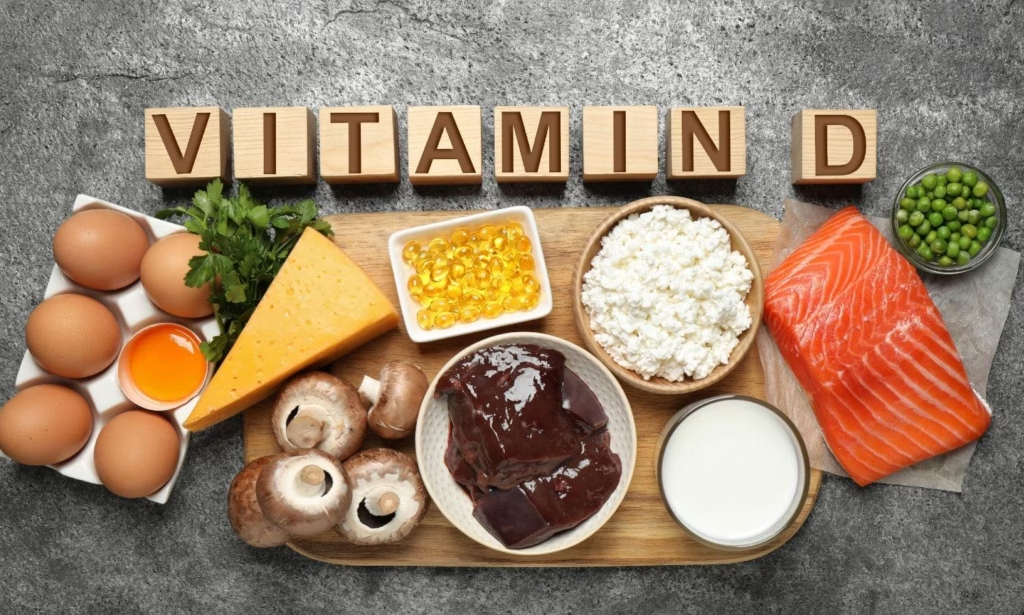
Two of the most direct nutritional contributors to testosterone production. Zinc is required for luteinizing hormone signaling, the upstream trigger for testicular testosterone production. Vitamin D functions as a steroid hormone precursor and has direct receptors in Leydig cells, the cells that produce testosterone. Both are deficient in a large proportion of American men.
Ashwagandha
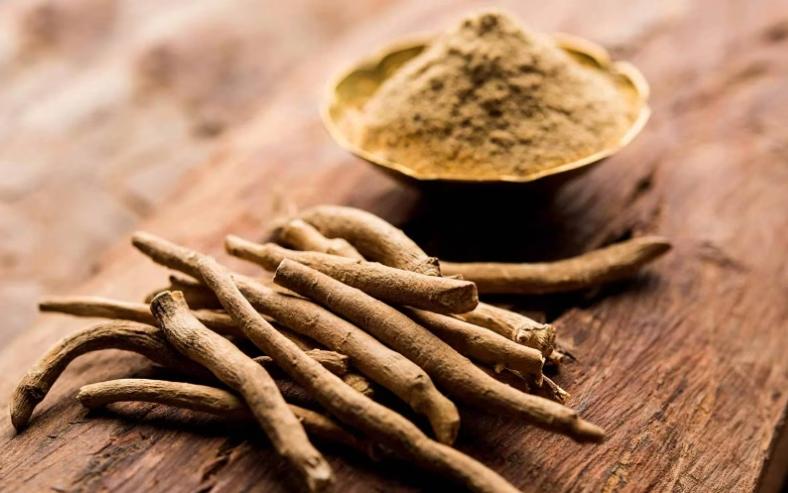
Multiple randomized controlled trials show significant increases in testosterone (up to 17% in some studies) alongside significant reductions in cortisol in men with elevated stress.[3]
The mechanism is well-understood: lower cortisol reduces pregnenolone steal and allows testosterone synthesis to increase.
Body Fat Management
Adipose tissue contains aromatase, an enzyme that converts testosterone to estrogen. Higher body fat, particularly visceral fat, means more aromatase activity and more testosterone-to-estrogen conversion.
This creates a cycle: lower testosterone promotes fat gain, fat gain lowers testosterone further. Breaking the cycle requires addressing both sides simultaneously.
Proactive Metrics Men Should Know
Too many men arrive at a health wake-up call in their late 40s that could have been identified and addressed a decade earlier with routine monitoring. Consider establishing annual baselines for:
- Total and free testosterone
- DHEA-S and SHBG (the binding proteins that affect testosterone availability)
- hs-CRP (inflammatory marker)
- Fasting insulin and HbA1c (metabolic health)
- Vitamin D
- Thyroid panel (TSH, free T3, free T4)
These markers tell a comprehensive story that standard annual physicals typically don’t capture.
Frequently Asked Questions
What are the signs of low testosterone in men?
Common signs include persistent fatigue, reduced libido, difficulty building or maintaining muscle, and increased body fat (especially abdominal).
Lower motivation and drive, brain fog, mood instability, and slower recovery from physical exertion are also common. Many men normalize these symptoms as aging without realizing they’re addressable.
At what age do testosterone levels start to decline?
Testosterone levels typically begin declining around age 30, at a rate of approximately 1–2% per year. The clinical threshold for low T is usually set at 300 ng/dL by US guidelines.
However, many men experience significant symptoms at levels above this threshold, particularly if they were higher-than-average in their 20s.
Can you raise testosterone naturally?
Yes, meaningfully. Resistance training, improving sleep quality, reducing body fat, addressing zinc and vitamin D deficiency, and managing chronic stress are each independently shown to support testosterone levels.
Combined, they can produce substantial improvements. Targeted supplementation with ashwagandha, zinc, and vitamin D adds further support on top of these lifestyle foundations.
Is TRT (testosterone replacement therapy) the right option?
TRT is a medical decision that should be made with a qualified physician based on confirmed low levels and symptomatic impact. For men with genuinely deficient levels who haven’t responded to lifestyle intervention, it can be appropriate.
For men with levels in the low-normal range, lifestyle and supplement optimization often produces sufficient improvement without the long-term suppression of natural production that TRT involves.
Why do men gain belly fat after 35 even without changing their diet?
Three factors converge: declining testosterone reduces muscle mass and metabolic rate, declining muscle mass reduces caloric expenditure, and increasing aromatase activity in existing fat tissue converts more testosterone to estrogen, further impairing body composition.
It’s a self-reinforcing cycle that requires active intervention to reverse.
What is the most important supplement for men over 35?
There’s no single answer that applies universally, but vitamin D, magnesium, and zinc form the nutritional trifecta most commonly deficient in American men over 35. Each plays direct roles in testosterone production, sleep quality, and metabolic health.
Ashwagandha is the most evidence-backed single addition for men dealing with chronic stress and its effects on hormonal health.
Mark Wealth builds personalized supplement protocols for men that account for your age, stress load, activity level, and health goals, not a generic male formula. Take the quiz.
References:
- Harman SM, Metter EJ, Tobin JD, et al. Longitudinal effects of aging on serum total and free testosterone levels in healthy men. Journal of Clinical Endocrinology & Metabolism. 2001;86(2):724–731. doi:10.1210/jcem.86.2.7219
- Leproult R, Van Cauter E. Effect of 1 week of sleep restriction on testosterone levels in young healthy men. JAMA. 2011;305(21):2173–2174. doi:10.1001/jama.2011.710
- Lopresti AL, Drummond PD, Smith SJ. A randomized, double-blind, placebo-controlled, crossover study examining the hormonal and vitality effects of ashwagandha in aging, overweight males. American Journal of Men’s Health. 2019;13(2). doi:10.1177/1557988319835985
Was the article useful?
Thank you for your feedback!